Episode Transcript
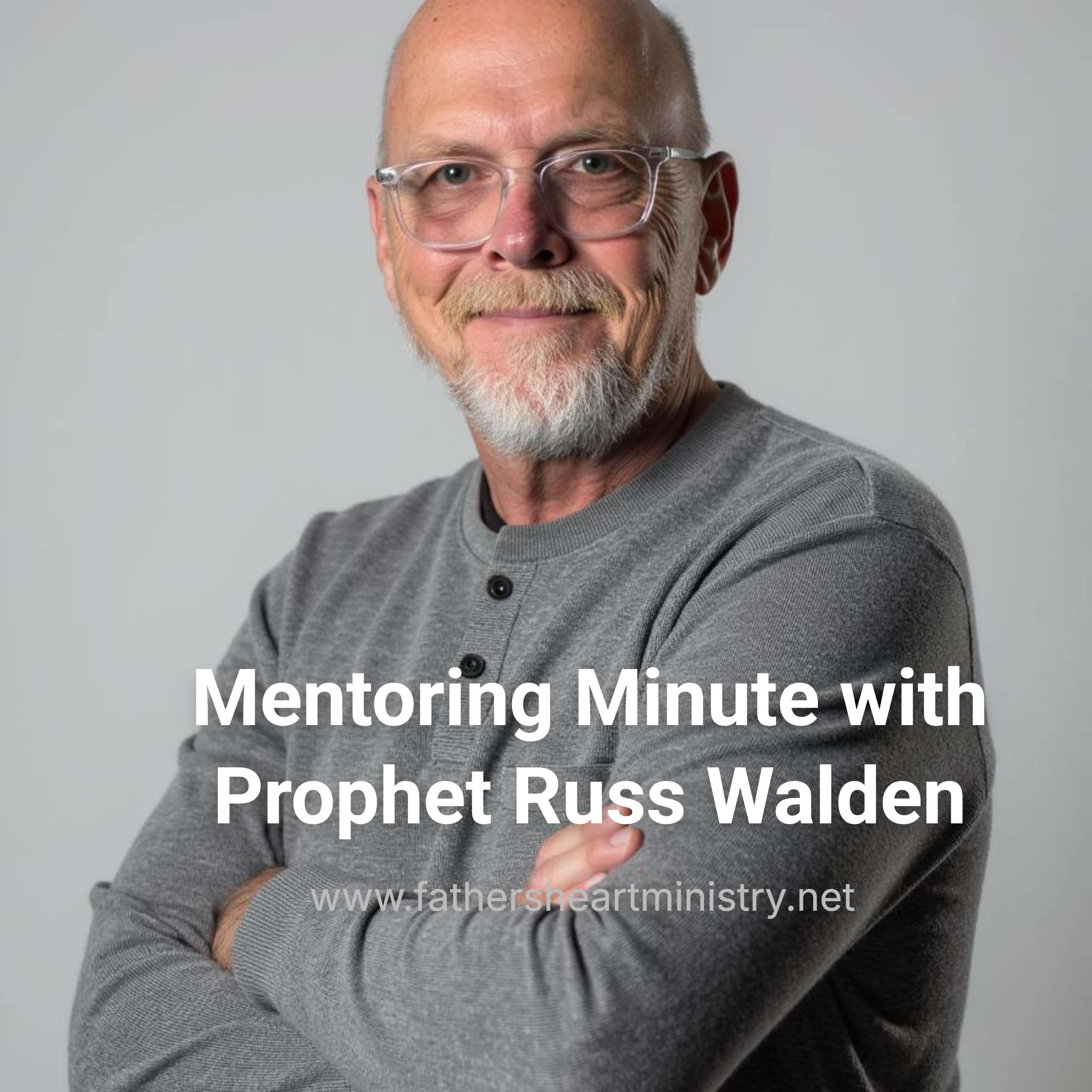
[00:00:00] Speaker A: Hi, this is Russ Walden with Father's Heart Ministry and I want to bring a message to you. The church without walls, the expansive heart of God. It's been said that the Gospel is the great leveler, crossing boundaries of culture, ethnicity, station in life, bringing unity and power to a people knit together by the bonds of Christ.
It's a profound truth often overlooked in our contemporary Christian walk. This principle of inclusion that was a cornerstone laid by the early church.
[00:00:41] Speaker B: This word inclusion has become a buzzword.
[00:00:44] Speaker A: Used by the enemy to corrupt the souls of men.
But in the beginning decades of the.
[00:00:51] Speaker B: Church, it was as this message explores.
[00:00:53] Speaker A: How the boundless nature of the salvation Christ brought us on the cross was intended for all.
[00:01:02] Speaker B: And it was intended to bring us all together in one body, one faith.
[00:01:09] Speaker A: To stand up and see the culture of the world, to overcome the world, the flesh and the devil, and see the nations come to their knees at the foot of the cross.
The early church really had a challenge with this concept. From its early days, the Christian church grappled with this radical notion that salvation through Jesus Christ wasn't just to the Jews, but also to the Gentiles, who had just inherently been at enmity with one another for millennia.
Even within the Jewish community itself, there.
[00:01:50] Speaker B: Were distinctions such as preferential treatment of.
[00:01:53] Speaker A: Hebrew speaking Jews over Hellenized Greek speaking Jews. And to address this, the apostles just didn't let that go and say that's just the way it is. No, they appointed seven Greek speaking Jews, Greek speaking Jewish Christians to serve as diakonos, deacons to ensure the equitable distribution of the resources to neglected Greek speaking widows.
This precedent, this historical precedent in the earliest days of the church, highlights the fact that this concept of inclusion, equity and social justice, far from being a modern idea that the enemy uses to confound us as we seek to live out the claims of Christ. But it was a foundational challenge the church confronted from its very inception.
In Ephesians 3, 8, 13, Paul addressed these things.
[00:02:55] Speaker B: He said unto me, who am less than all the saints, Is this grace.
[00:02:59] Speaker A: Given that I should preach among the Gentiles? There's the trigger. The Jews at that point tended to see salvation as only being for the Jews.
[00:03:12] Speaker B: And so when he says that, it's.
[00:03:13] Speaker A: An immediate challenge to the cultural conditioning of the day to preach among the.
[00:03:19] Speaker B: Gentiles the unsearchable riches of Christ and.
[00:03:22] Speaker A: To make all men see what is the fellowship of the mystery, not the division among God's people.
[00:03:30] Speaker B: What is the fellowship that should be.
[00:03:31] Speaker A: The first thing people see when they look at the church, the fellowship, the kona nia that is in Christ, across gender lines, culture, ethnicity, even belief systems, because the denominations have been like spiritual.
[00:03:48] Speaker B: Gulags that we find ourselves in separating us from others who don't quite believe.
[00:03:53] Speaker A: The way the group we're connected with does.
He goes on to set to make.
[00:03:58] Speaker B: All men see what is the fellowship of the mystery which from the beginning.
[00:04:02] Speaker A: Of the world hath been hid in God, who created all things by Jesus.
[00:04:06] Speaker B: Christ to the intent that now to.
[00:04:09] Speaker A: The principalities and powers in heavenly places.
[00:04:12] Speaker B: Might be known by the Church. The manifold wisdom of God. What was the manifold wisdom of God?
[00:04:17] Speaker A: The bringing together of male and female and slave and free and different ethnicities and cultures into one culture, the culture of the kingdom, according to his eternal.
[00:04:33] Speaker B: Purpose, which he purposed in Christ Jesus.
[00:04:35] Speaker A: Our Lord, in whom we have boldness with access.
[00:04:40] Speaker B: So, yes, I'm very bold with access.
[00:04:42] Speaker A: If we are not in an inclusive believer, accepting the fullness and the importance.
[00:04:50] Speaker B: Of our connection to be a part.
[00:04:52] Speaker A: Of something greater than ourselves, then that boldness and excess is affected.
[00:05:00] Speaker B: The Christian life was not intended to.
[00:05:02] Speaker A: Be lived out in isolation, in segregation from others of like faith.
And the Apostle Paul was instrumental in.
[00:05:12] Speaker B: Shaping the Church's understanding of gentile inclusion.
[00:05:17] Speaker A: Eloquently articulating this tearing down of walls as Paul what he understood to be his divine mandate and his calling. In that passage, Ephesians 3, 8, 13, Paul understood his calling as expanding the Gospel's reach beyond the Jewish people to encompass all non Jewish nations.
[00:05:44] Speaker B: Now, central to this expanded understanding, he mentions terms like the unsearchable riches of.
[00:05:50] Speaker A: Christ, the fellowship of the mystery, the manifold wisdom of God, the eternal purpose of God.
[00:05:57] Speaker B: And it's interesting that word, Greek word.
[00:05:59] Speaker A: Translated unsearchable, conveys this sense, and this is in Ephesians 3, 8, of something that is past finding out it's boundless.
[00:06:10] Speaker B: It's a church without boundaries.
[00:06:12] Speaker A: It speaks of an inexhaustible, immeasurable depth.
[00:06:17] Speaker B: That transcends human comprehension of what Jesus did for us.
[00:06:22] Speaker A: It signifies the limitless nature of what Jesus offers us. And say, how come I'm experiencing limits sometimes because we, the limitlessness we walk in in God is measured by the limits that we take off of others.
Because what you do for others in Christ, Christ is going to do for you.
In first Corinthians three, three, Paul says, are you not carnal, whereas there is.
[00:06:53] Speaker B: Among you envy, strife.
[00:06:55] Speaker A: I'm not envious, I'm not strifeful.
[00:06:57] Speaker B: What about divisions? Divisions are the very expression of modern Christian culture.
[00:07:02] Speaker A: Are you not carnal and walk as men? We have lots of justifications for the denominational divisions, but we are perpetrating a division in pursuit of what we think is doctrinal purity. How can ungodliness bring about godliness?
For he says, some of you say, I'm of Paul. And of course, denominations are somewhat passe today, but people are pursuing different ministries. I am of Paul, I am of Apollos. In other words, following after the cult of personality. And Paul says, are you not carnal?
Are you not? And that means animated by the flesh as opposed to spiritual, which means animated by the Spirit.
Now, look, while overt forms of exclusion may seem less prevalent today, in Christian culture, there are subtle prejudices. How does this apply to us? There are subtle prejudices that could still.
[00:08:00] Speaker B: Manifest in Christian culture.
[00:08:03] Speaker A: Historically, various denominations and theological groups have condemned those with different beliefs and usually.
[00:08:11] Speaker B: Questioning whether they're even going to heaven.
For instance, early Pentecostals were denounced by other groups for their belief in speaking in tongues.
[00:08:20] Speaker A: They were accused of being demon possessed.
[00:08:24] Speaker B: And then, on the other hand, some.
[00:08:25] Speaker A: Pentecostal and charismatic groups have questioned the.
[00:08:28] Speaker B: Salvation of cessationist denominations for their rejection.
[00:08:32] Speaker A: Of the charismatic gifts. And these underlying biases, though they can be subtle, they can often be subdued.
They persist and militate against the unity wherewith we are called to serve the.
[00:08:47] Speaker B: Father as members of his body and.
[00:08:50] Speaker A: Members of his church. Paul said in First Corinthians 1:13, Is Christ divided?
If we look at the body of Christ, if we look at what Jesus came to establish, did he come to establish a politicized, divisive monstrosity such as we see in Christian culture today? Was Paul crucified for you or were you baptized in the name of Paul? He goes on to say, beyond theological differences, the politicization of Christian culture can foster division.
[00:09:27] Speaker B: It's not uncommon to hear some believers.
[00:09:29] Speaker A: Insist that one cannot align with certain political ideologies and and still claim to be a Christian.
Such partisan attitudes, however, understandable in their.
[00:09:42] Speaker B: Origins because there are boundaries and there.
[00:09:44] Speaker A: Are limits that kick in where moral issues are concerned. But yet we tend to just glibly embrace this partisan attitude. And it betrays in us and in the church today a lack of informed understanding that contradicts the overarching message of Christ's Gospel. You cannot take the mandate of unity out of the gospel and still have the Gospel.
The claims of Christ call us to a unity that surpasses partisan divides and.
[00:10:21] Speaker B: Reminds us that segmenting ourselves from others.
[00:10:25] Speaker A: In the body of Christ for any reason within moral constraints. Listen to what I'm saying and what I'm not saying.
[00:10:32] Speaker B: He can be contrary to the very.
[00:10:33] Speaker A: Gospel that Paul preached.
[00:10:35] Speaker B: Paul said in Ephesians 4, 4, 6.
[00:10:37] Speaker A: There is one body, one spirit.
[00:10:40] Speaker B: Oh, you know, we're one. No, we're not.
[00:10:44] Speaker A: Open your eyes.
[00:10:45] Speaker B: Don't call this darkness light. Look at Christianity, at the Christian religious.
[00:10:50] Speaker A: System as we know it. You're not going to tell me that the defensiveness that we see in the body of Christ is that which Christ died to bring about.
[00:11:01] Speaker B: He goes on. He says, we're called in one hope.
[00:11:03] Speaker A: Of our calling, one Lord, one faith, one baptism, one God and Father of us all, who is above all and through all, and in you all. And if we are not one, he.
[00:11:14] Speaker B: Is not in us.
[00:11:16] Speaker A: He is not with us. If we are not one, you have to let the Scripture, interpret the Scriptures, the great discerner. If we are not one, then we have to question, is he in us? Is he in what we call the church?
Despite scriptural teachings that emphasize the church as one body in Christ, divisions persist.
45,000 denominations is the current estimate that we have in Christian culture today.
[00:11:46] Speaker B: These divisions stem from a long history.
[00:11:49] Speaker A: Of theological disagreements, cultural adaptations, diverse interpretations of scripture.
And while some use these divisions to justify spiritual but not religious, we had those in Paul's day. I'm of Paul, I'm of Apollos. Oh, I'm of Christ. I'm spiritual but not religious.
That spiritual but not religious stance is aloofness.
It's a form of sectarianism, and it's.
[00:12:19] Speaker B: Contrary to the biblical mandate for unity.
[00:12:22] Speaker A: What is the answer?
[00:12:24] Speaker B: Returning to the core of the gospel.
[00:12:26] Speaker A: That calls us to transcend sectarianism in our own hearts and minds from the.
[00:12:31] Speaker B: Cultural conditioning that we've been a part.
[00:12:33] Speaker A: Of, the early churches struggle with these issues.
[00:12:39] Speaker B: Paul's radical revelation of the boundlessness of.
[00:12:44] Speaker A: Christ for all, all cultures, everyone, in every station of life. And it's still relevant today.
[00:12:52] Speaker B: I remember as a young pastor, I.
[00:12:54] Speaker A: Used to say that man too.
[00:12:55] Speaker B: So much of the New Testament is.
[00:12:56] Speaker A: All about Jews and Gentiles, and that's been addressed in Acts 15.
But then I came to understand, looking.
[00:13:03] Speaker B: At the divisiveness in Christian culture, how desperately we need the message.
[00:13:07] Speaker A: Yet today, to be clear, we're not extending this concept of inclusion in Christ to those who make moral failure a lifestyle.
[00:13:19] Speaker B: But inclusion in Christ does extend nonetheless.
[00:13:23] Speaker A: Far beyond our comfort zone, far beyond the comfortable cultural boundaries we live in that separate us from others in Christ.
When we allow sectarianism, political bias, denominational pride to create barriers in the body.
[00:13:40] Speaker B: Of Christ, we diminish the very message.
[00:13:42] Speaker A: We'Re called to proclaim.
Our call is to embrace the expansive nature of the love of God and.
[00:13:50] Speaker B: Extend grace to all who confess Christ, regardless of their background, theological nuances or political leanings.
[00:13:59] Speaker A: So they have to be Let me tell you something.
Someone may have a political leaning that seems totally contrary to moral values, but you think about it. Are you not going to give them.
[00:14:10] Speaker B: A chance to grow?
[00:14:12] Speaker A: Are you not going to give them a chance to come up out of that?
[00:14:15] Speaker B: It's not going to happen by pointing the fingers and throwing rocks at each other.
Listen, the unity we strive for, it's.
[00:14:22] Speaker A: Not about uniformity, but it's about recognizing our shared identity in Christ.
Allowing, we say, blood's thicker than water, but to allow Spirit to begin to be a preeminent driving force and the.
[00:14:38] Speaker B: Holy Spirit in our midst, bringing us.
[00:14:40] Speaker A: Together in Christ, even at great cost.
So I just ask you.
[00:14:47] Speaker B: Examine your heart honestly.
[00:14:50] Speaker A: Assess if you can. If you can, set aside the tyranny of your own opinions and assess if any prejudices or exclusive attitudes subtly influence your interactions with fellow believers.
Embrace the unsearchable riches of Christ. Let's meditate on the boundless nature of.
[00:15:13] Speaker B: The salvation we have in Christ, remembering.
[00:15:15] Speaker A: It'S not just for us, but it's for all people, without exception, through repentance, faith, receiving his grace, prioritizing unity over uniformity. We want to seek common ground with.
[00:15:30] Speaker B: Other Christians, focusing on our shared values, our shared faith in Christ, rather than.
[00:15:35] Speaker A: Minor disagreements challenge partisan thinking. Let's resist the urge to conflate political affiliations with spiritual understanding, remembering that Christ's.
[00:15:48] Speaker B: Kingdom transcends earthly politics. Jesus said it real plain.
[00:15:51] Speaker A: If my servants were my kingdom was of this world, then would my servants fight.
That comes under the heading of the political affiliations of his people, of God's people. Not that we're not supposed to engage.
[00:16:08] Speaker B: In politics, but we are not to.
[00:16:10] Speaker A: Allow politics to become the de facto religion of the realm where we're concerned.
Heavenly Father, we come before you acknowledging your sovereignty and your unfailing love.
[00:16:23] Speaker B: Thank you for the gift of your.
[00:16:24] Speaker A: Son and for the Church, your bride, redeemed by the blood of Jesus.
We confess, Lord, that your children have often fallen short of the unity you desire for us.
You've allowed, we've allowed differences of opinion.
[00:16:42] Speaker B: Tradition, different understandings to create divisions where there should be seamless fellowship.
[00:16:49] Speaker A: Forgive us, Father.
[00:16:50] Speaker B: Forgive us for pride, for stubbornness, for.
[00:16:53] Speaker A: Inability to fully grasp the depth of.
[00:16:56] Speaker B: Your call to oneness.
[00:16:58] Speaker A: Forgive us for the times we prioritized our preferences over the sacred bond of your spirit.
We ask, Father, that you would instill in each of us a spirit of profound humility. Help us to value others above ourselves, to listen with open hearts, to seek understanding before judgment, to remove from us.
[00:17:23] Speaker B: All envy, jealousy, contention, and clothe us.
[00:17:26] Speaker A: Instead with divine love, a love that is patient, kind, quick to forgive.
[00:17:33] Speaker B: May our love for one another be.
[00:17:34] Speaker A: A testament to the world of your presence with us.
We pray for the mending of fractured.
[00:17:41] Speaker B: Relationships and the healing of old wounds.
[00:17:44] Speaker A: In the body of Christ.
[00:17:46] Speaker B: Where there have been disagreements, grant us wisdom and grace to navigate them in.
[00:17:50] Speaker A: A way that honors you and strengthens our bonds.
Help us to see beyond our differences and to recognize the common ground we share in Christ.
Stir within us, Father, renewed passion for the Great Commission.
[00:18:07] Speaker B: So that our shared purpose of spreading.
[00:18:09] Speaker A: The Gospel might overshadow lesser concerns, we offer this prayer up to you. In the mighty name of Jesus.
Father, will you not revive us again? Bring us back to the unity that characterized the early church, Father, that we might fully please you in all things.
If you'd like to know more about.
[00:18:35] Speaker B: The ministry, my name is Russell Walden.
[00:18:37] Speaker A: Go to fathersheart ministry.net I would love to communicate with you. There are many free resources there that'll just put you over in life.
Have a great day.